

We’re a school for kids who love math,
not for kids who love only math.

“Why can’t this be every day?”
Proof was born out of a math circle, when two parents watched their kids come alive in ways they never managed to in school. The kids were right in their element, puzzling over challenging problems alongside friends who were just as curious, excited, and persistent as they were. One parent asked the other, “Why can’t this be every day?”
Years later, we keep asking ourselves, “How can we make it like that, every day?”
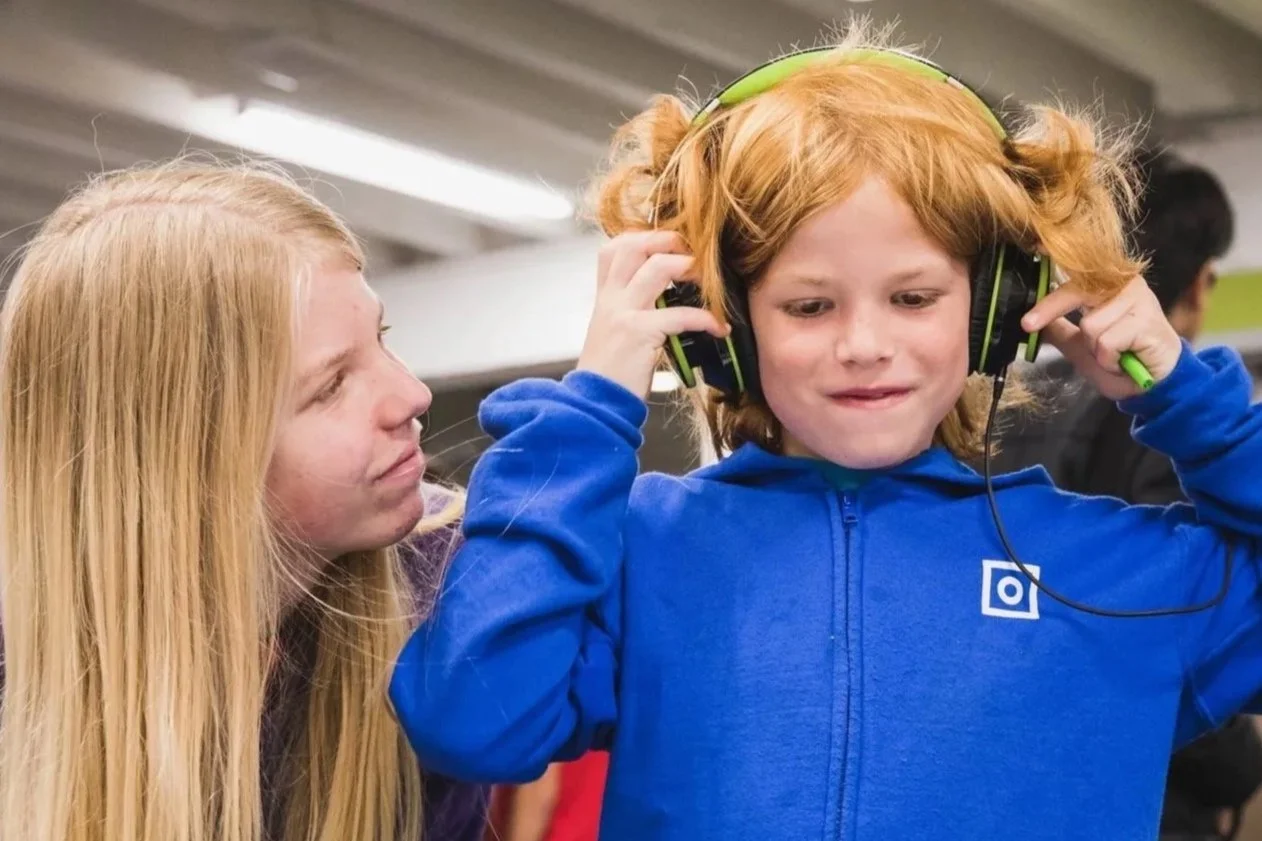
44 students and a gong
In 2015, Proof launched with 44 founding students whose families had committed to the school before we had even signed a lease. Our first home was the historic and cavernous former home of the Press Club of San Francisco. Only two classrooms had doors; one of those was nestled inside a drained, carpeted-over swimming pool. Under the chandeliers of a former ballroom, we built all of the furniture ourselves, hit a small gong to signal the end of lunch, and used masking tape to create a pickleball court. We still have that gong.
We’re a liberal arts school where kids get to do
two hours of math a day.
Same school. Beautiful new home.
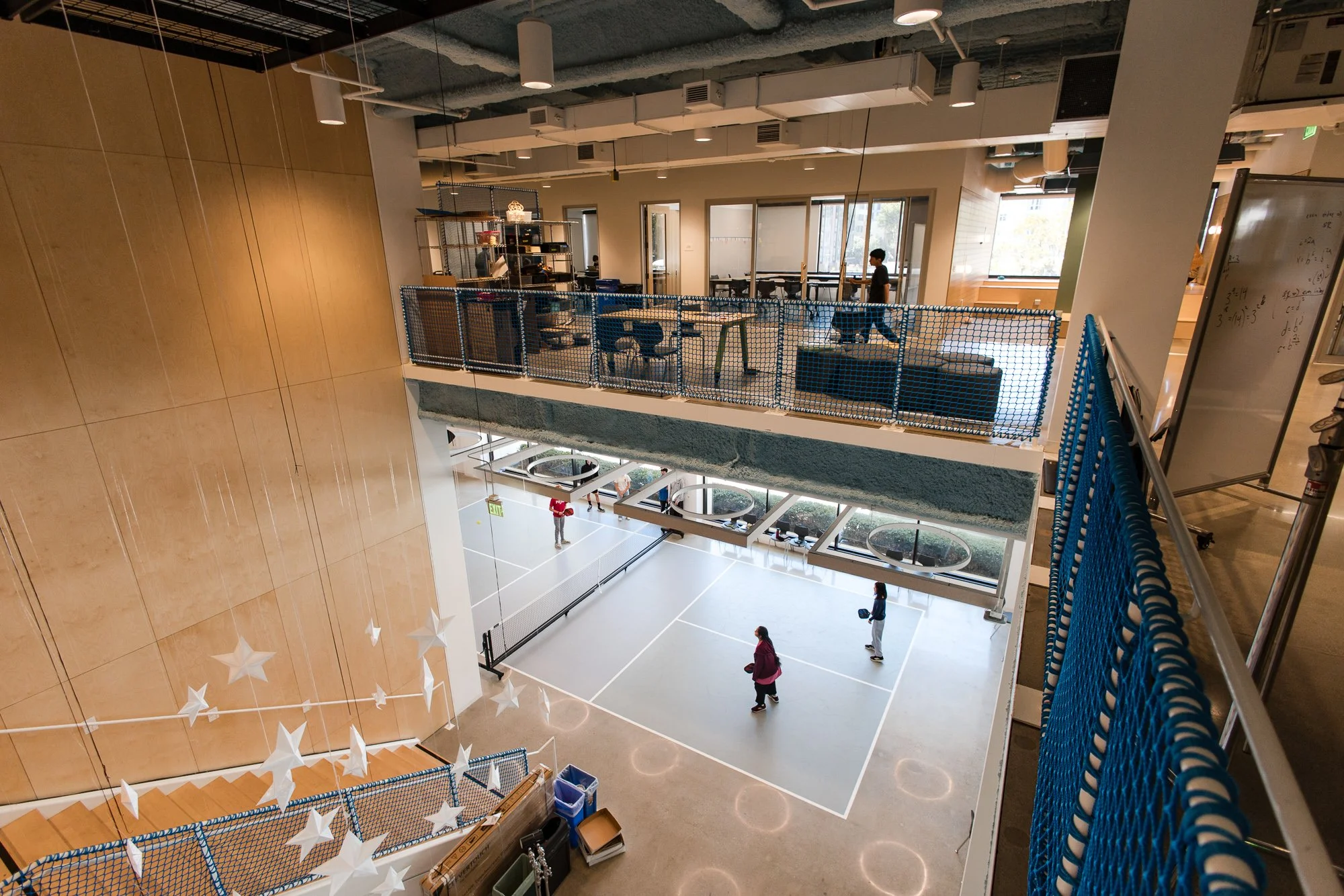
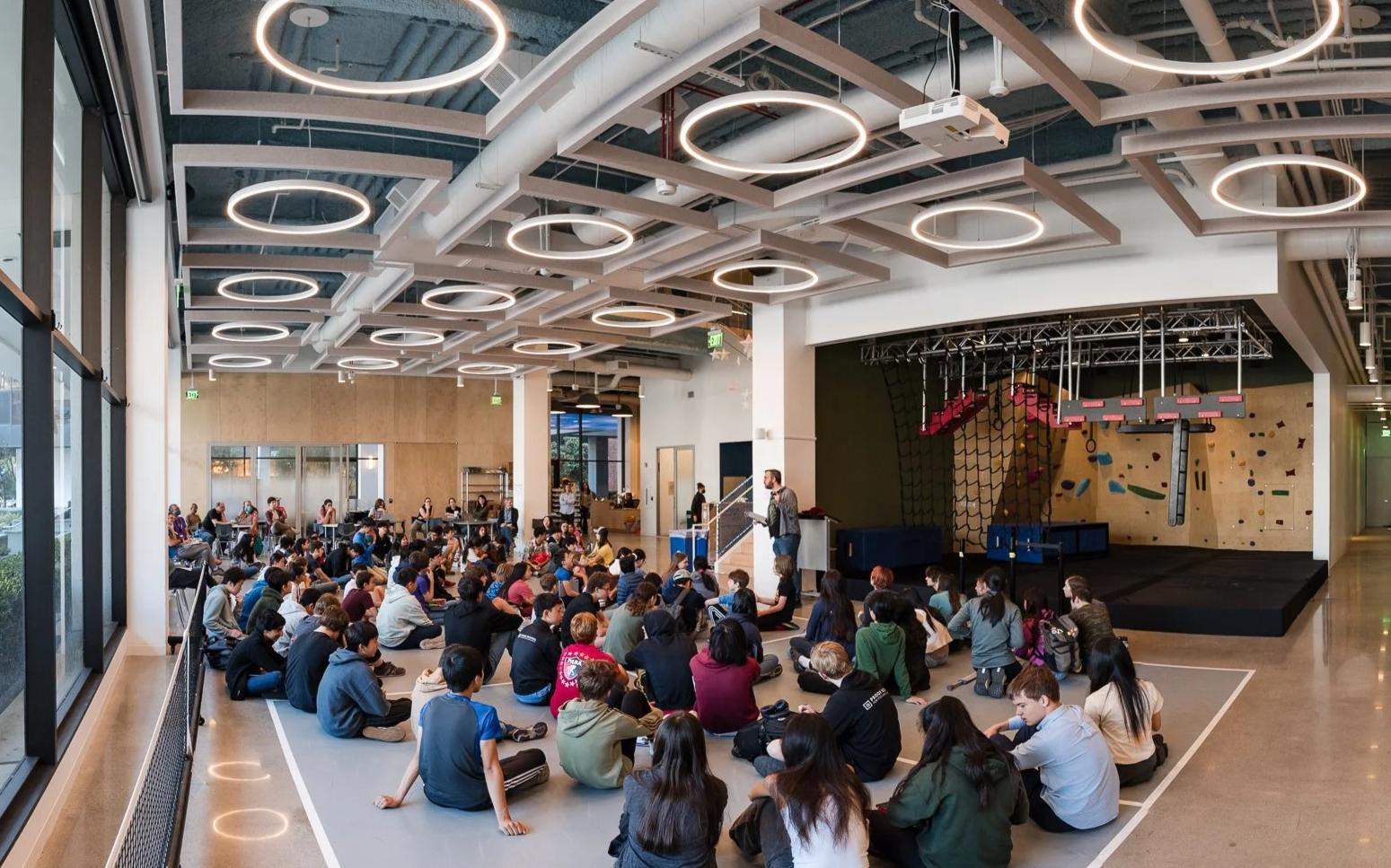
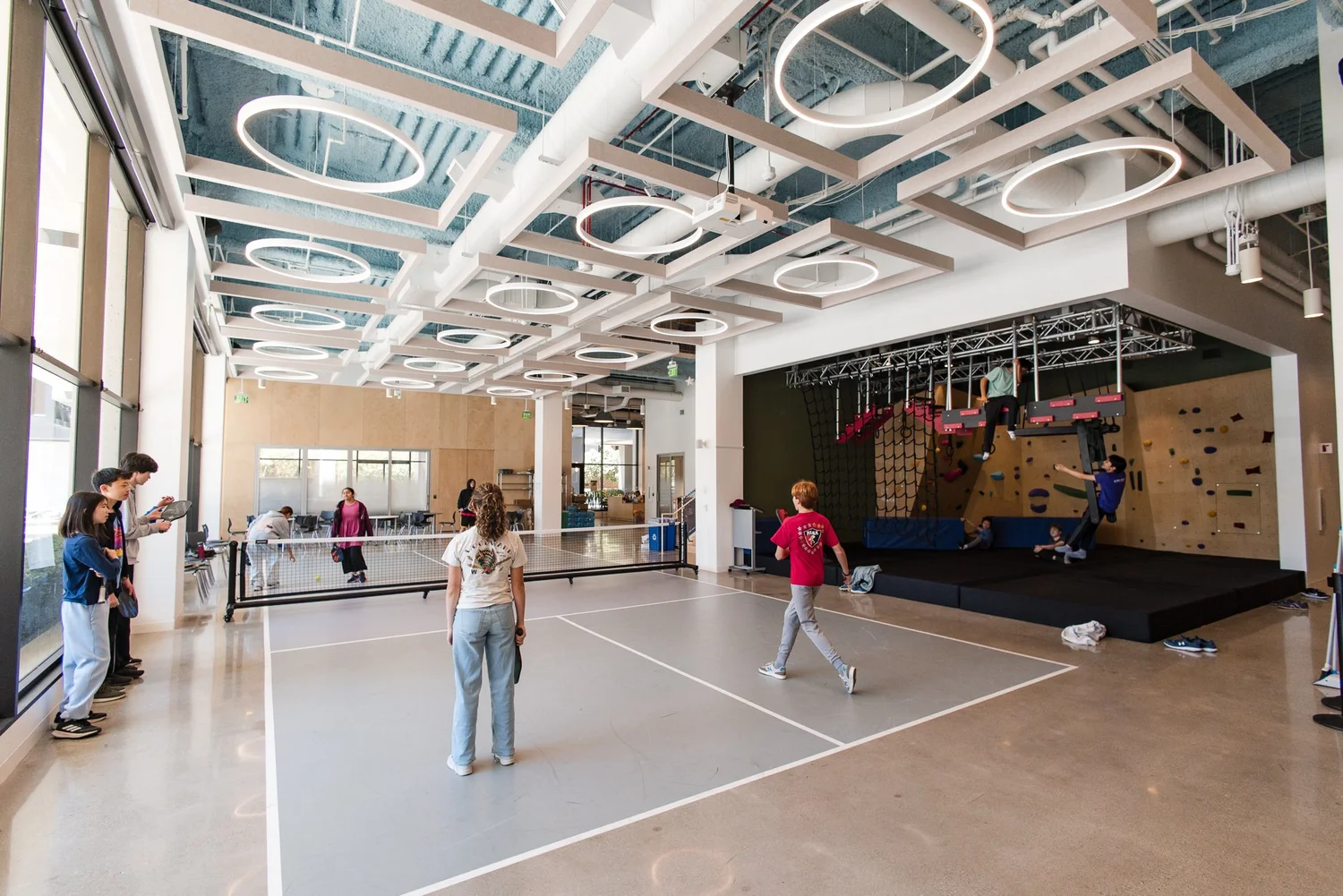
We recently moved into a beautiful, light-filled new home in San Francisco’s East Cut neighborhood. Our new space is twice the size of our former campus, and our student body is now at 135 students with room to grow. We have classrooms with actual doors, whiteboards that roll the way they’re supposed to (though we sort of miss the ones we zip-tied to garment racks in our first year), and a properly painted pickleball court. We also have an expansive kitchen for student cooking projects, reading nooks and quiet corners, and a climbing wall right in the heart of the school.
The same three people lead the school, Ms. Shaunda still anchors the entrance, and one of our math teachers still wears a new handcrafted puzzle on a name tag every morning, as he has since the day we opened. The whole school still sings “Happy Birthday” for each student birthday, student initiatives still fill the school with purpose and excitement, and our afternoons are still filled with captivating, demanding mathematics. Our space has changed but the school is unmistakably still Proof, now with more room for whatever comes next.
What’s on the horizon?
Over the next few years, we plan to grow gradually to about 170 students and 35 teachers. Our target size is large enough to support a wider range of courses and activities, yet still small enough for students to know and be known by people throughout the school. At that scale, we can remain nimble and responsive, continuing to give students and teachers the freedom, trust, and support they need to turn sparks of “Could we …” into clubs, trips, projects, or traditions. We intend to grow thoughtfully, purposefully, and flexibly by investing deeply in what serves our students and mission, letting go of what does not, and leaving room for new ideas. Our goal isn’t to become a large school; it’s to give our small school more possibilities. Our new home gives us room for this next chapter.

We offer a transformative liberal arts education to young people with an active curiosity and a passion for mathematics, equipping them to reason, communicate, and positively impact their world.

Who are we?
Since the get-go, we’ve been asking ourselves this question. Answering it turns out to be pretty dynamic, but also fairly consistent. That’s because growth inevitably means evolving in a way that reveals who you are.
One reason we change as a school is because the community members change. Each year, a crop of seniors graduates and a new cohort of 6th graders enter. Most years, new faculty members join us, and bring with them new interests and backgrounds. The goal is to let the community reflect who is in it.
The other goal is to make sure the people coming into the school are Proofy — that’s what helps us stay consistent. It probably helps that our three-member leadership team has been together since year 0, that our mission fills an actual need, and that our faculty, staff, and board all look at the same spot on the horizon.
School Leadership
Sam Vandervelde
Head of School
PhD, University of Chicago
BA, Swarthmore
Kathy Lin
School Programs & Admissions
MAT, Tufts
BS, MIT
Zachary Sifuentes
Dean of Humanities
MFA, University of Michigan
BA, Harvard
Program Leadership
Jason Horowitz
Math Department Chair
PhD, UC Berkeley
BA, Harvard
Michael Yetman
Director of Science Programs
PhD, Baylor College of Medicine
BS, UT Austin
Connie You
Director of HS Advising
MA, Queens College
BA, Harvard
Ilyse Gordis
Director of MS Advising
BA, UC Santa Cruz
All leadership members also teach
Math
Linda Green
PhD, Princeton
MA, BA, UChicago
Aaron Hill
PhD, UIUC
EdM, MS, UIUC
BS, BYU
Miha Habic
PhD, CUNY Grad Center
BA, University of Ljubljana
Alex Heyde
PhD, Harvard
BA, Harvard
Shelly Manber
PhD, UC Berkeley
BS, MIT
Kaethe Minden
PhD, CUNY Grad Center
BA, UCLA
Ari Nieh
PhD, UC Berkeley
MA, Longy School of Music
BS, Harvey Mudd
Noah Schweber
PhD, UC Berkeley
BA, UChicago
Eric Severson
PhD, UC Davis
BS, UC Berkeley
Austin Shapiro
PhD, UMichigan
BA, UC Berkeley
Science & CS
Steve Chait
MEd, Boston College
BS, MIT
Jason DeGraaff
BA, Amherst
Alivia Fann
MA, Texas A&M
BA, U of Tennessee
Patrick Zulkowski
PhD, Johns Hopkins (math)
PhD, UC Berkeley (physics)
BA, U of Delaware
Humanities
Joel Street
PhD, UC Berkeley
BA, DePauw University
Elise DeFazio
BA, USF
Josh Gillon
PhD, MA, Princeton
BA, BYU
Meghan Vicks
PhD, MA, U Colorado Boulder
BA, Middlebury
Derek Wilairat
MA, Columbia
BA, Pomona
Staff
Sharon Kornblum
Finance
Shaunda Randle
Front Office
Board
Paul Zeitz
Chair
Perry Tam
Treasurer
Sam Vandervelde
Head of School
Alon Amit
Caroline Jones
Gina Lee
James Sotiros
Ravi Vakil
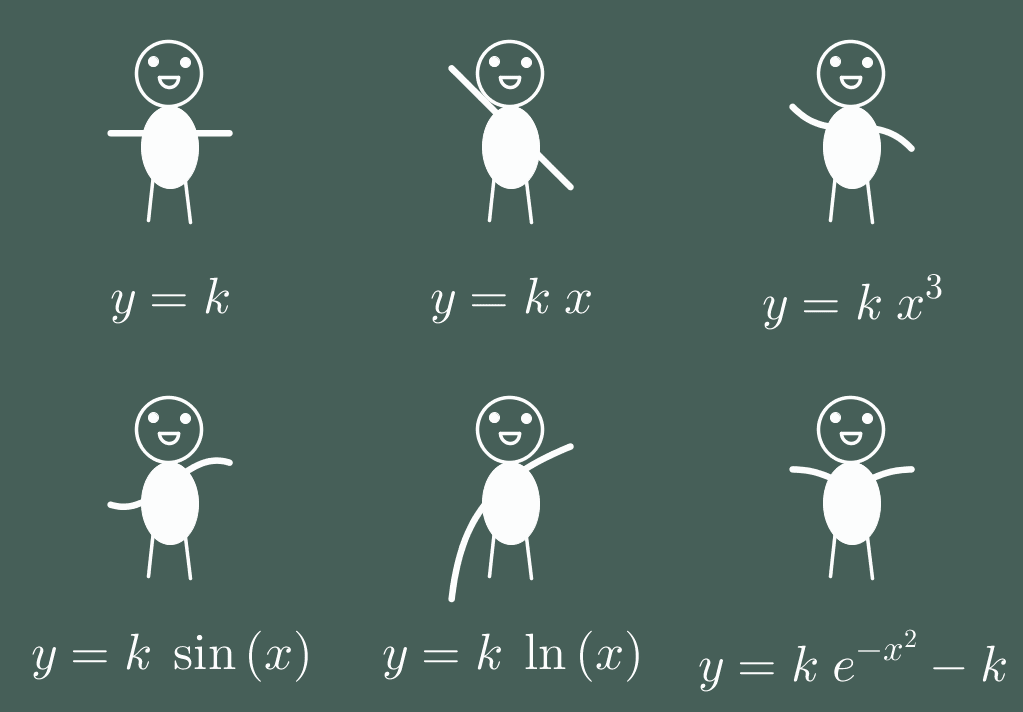
√(-1) 2³ ∑ π
(you probably know how to finish that)

7 grade levels, one dynamic community
A seven-year continuum means fewer disruptive transitions, a longer runway for growth, and more years to deepen relationships. Our curriculum is aligned across middle and high school, and distinct at each grade level. A number of our teachers also teach across grade levels.
It is not uncommon for a younger Proofnik to get mentored by an older student—and later become a mentor themselves. Staying rooted in a community for up to seven years means we can learn how to support and challenge each student.
“Oversight” as a contronym
Did you know that some words have two meanings that contradict each other? Oversight can mean supervising something or missing something. Proof can be like that. We don’t have AP classes, varsity sports, valedictorians, or lockers. We didn’t overlook these things — we looked into them and drew different conclusions.
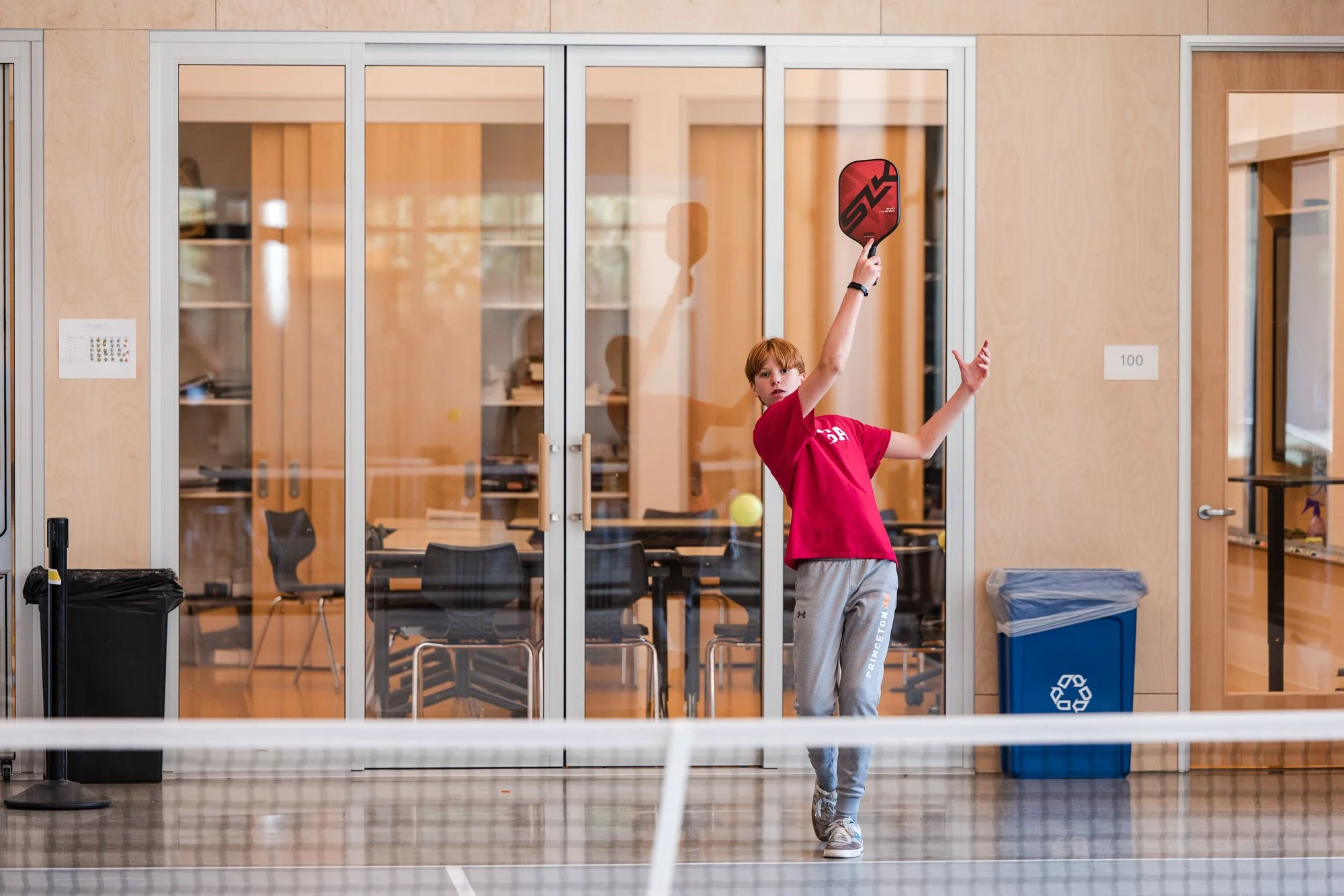
What’s missing says a lot about what’s there. We offer Latin, and give students a way to study a language of their choosing. We explicitly teach what others implicitly evaluate, like writing. We offer a fairly select number of AP exams on campus because we encourage kids to develop actual interests that they can take with them to college. And we’ve got a pickleball team, not an athletic director.
Basically, we'd rather do a few things well than everything adequately.